What your hip flexors are actually doing in a sculpt class
October 4, 20265 minute read
If you have ever held a low lunge in class and felt it everywhere except where you were supposed to, this one is for you. Most of the time, the fix is not more effort. It is knowing which muscles you are actually asking to work.
Meet the muscles
Your hip flexors are a small team, not one muscle. The biggest player is the iliopsoas: the psoas, which runs from your lower spine down to the top of your thigh bone, and the iliacus, which lines the inside of your pelvis and joins it on the way down. Next to them sits the rectus femoris, the one quad muscle that crosses both the hip and the knee.
Their job is to bring your thigh toward your torso. Every time you lift a knee, climb a stair or step forward into a lunge, they are working.
Because the psoas attaches to your lower spine, a tight one does not just pull on your hip. It pulls on your back.
Why the lunge feels wrong
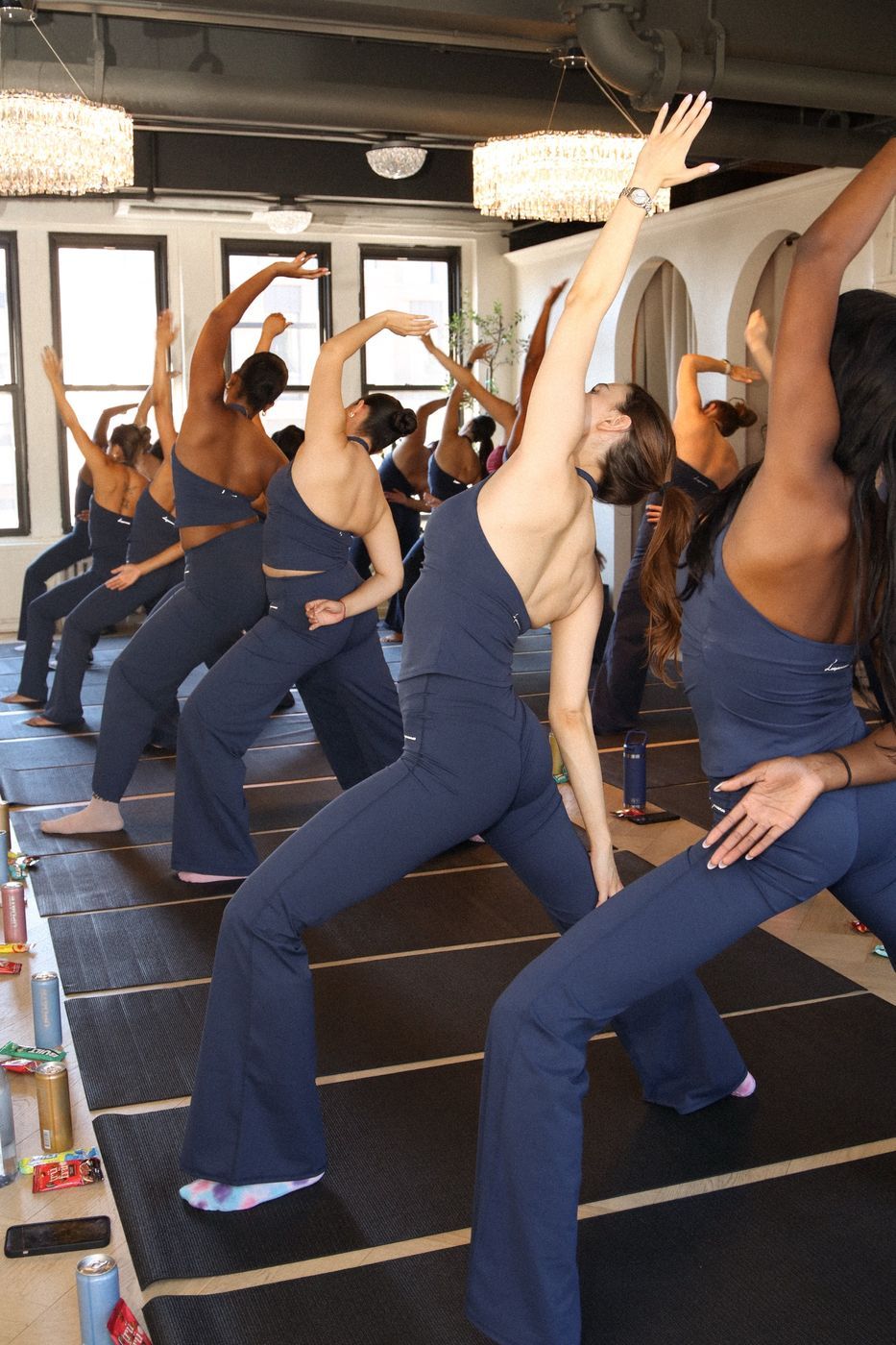
In a lunge, the hip flexors of your back leg are being lengthened. If they are tight, which they usually are after a day of sitting, your body finds the easiest way out: the pelvis tips forward and the lower back arches. The stretch disappears from the front of the hip, and the pressure lands in your lower back instead.
If you feel it in your back, your hips are asking for a different angle, not more depth.
Tailbone down, ribs in
The cue I give in every class
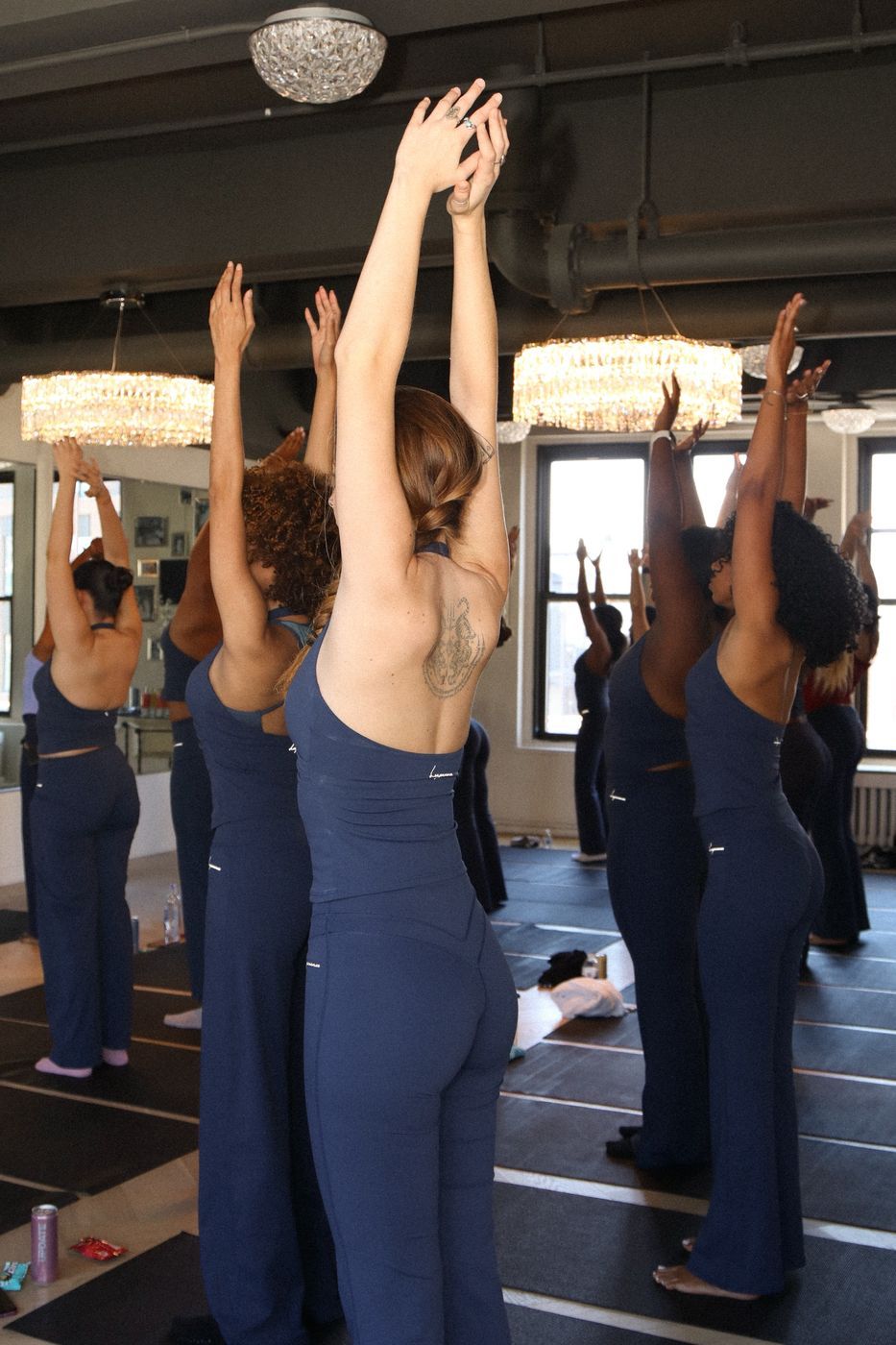
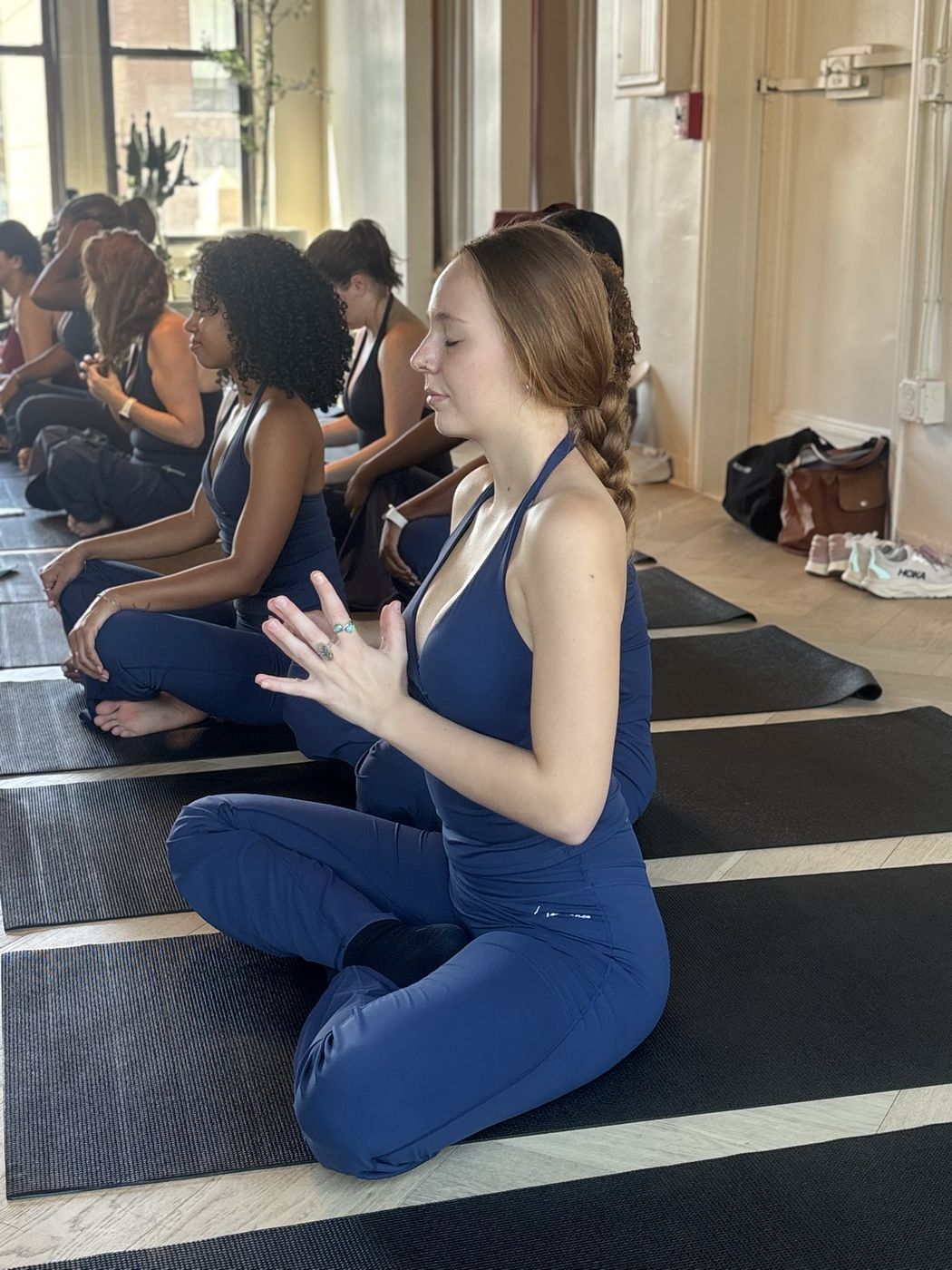
Before you sink any lower, squeeze the glute of your back leg and gently draw your tailbone down toward the floor. Think of your pelvis as a bowl of water you are tipping slightly backward. Keep your ribs stacked over your hips instead of flaring forward.
Most people feel the stretch move to the front of the hip almost immediately, and it usually means coming up an inch or two. That is the point. Depth that comes from your lower back is not doing what you came to class for.
Try it the next time you are on the mat with me, and tell me where you feel it.
Why I started a wellness club instead of a workout class
September 21, 20264 minute read
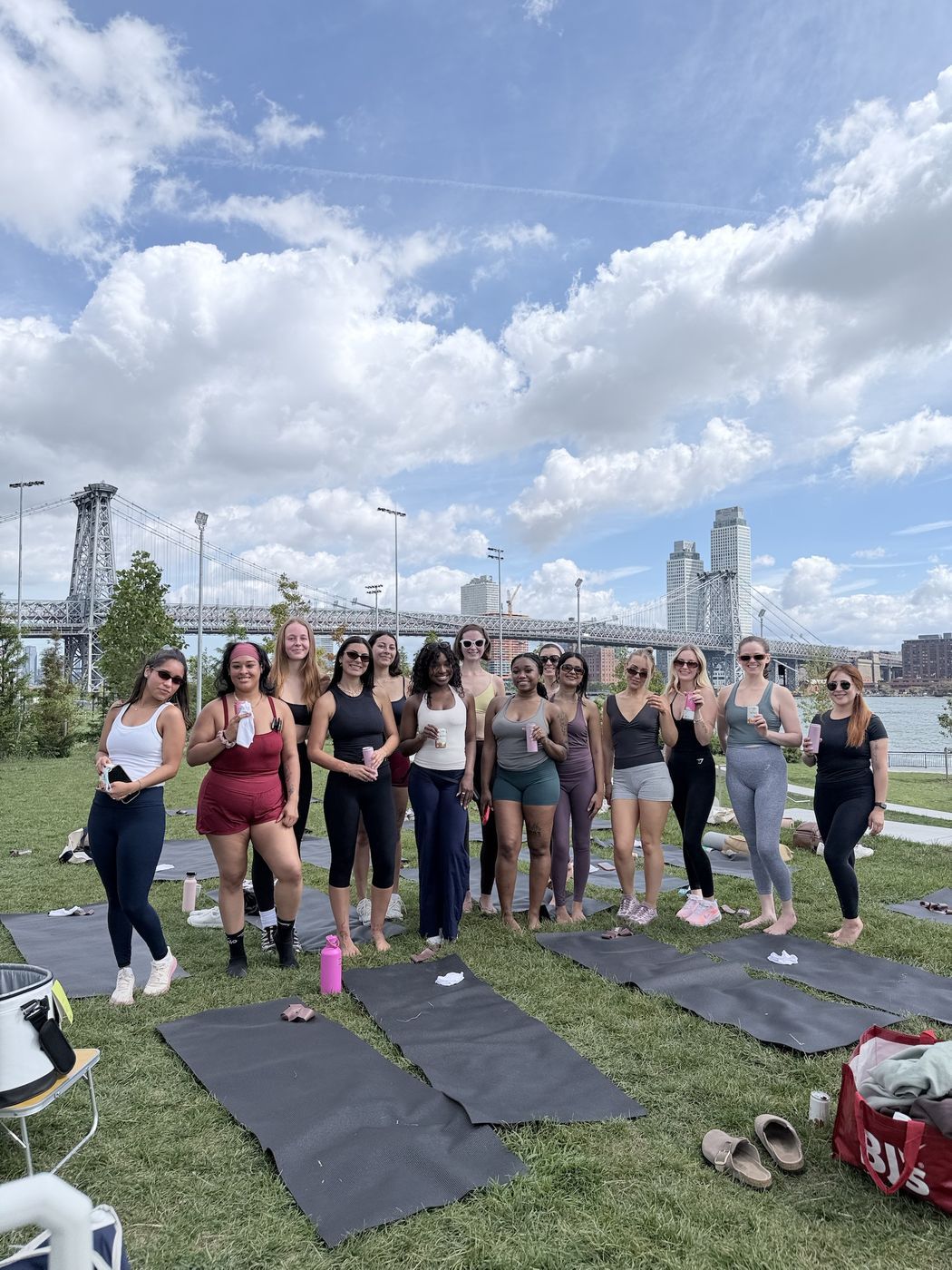
After class, by the river
I have taught a lot of classes in New York. The workout is almost never the part people remember. It is the five minutes afterward, when someone finally talks to the woman on the next mat.
SYNC started because I wanted to build a whole evening around those five minutes.
A class with somewhere to go after
Every SYNC event begins with a sculpt class, because moving together is the fastest way I know to make strangers comfortable. Then we stay: something to eat, a conversation, sometimes a brand we love joining us for the night.
The goal was never a bigger class. It was a room people did not want to leave.
This city can make it feel strangely hard to meet people, even when you are surrounded by them. A club gives you a reason to show up again, and showing up again is how friendships actually start.
The nervous system, explained like a tutoring session
September 8, 20265 minute read
When my anatomy students panic the night before an exam, I start with the part of the nervous system that is causing the panic. It tends to help on two levels.
Two settings
The autonomic nervous system runs everything you do not consciously control, and it has two main branches. The sympathetic branch is your accelerator: heart rate up, breathing faster, digestion on pause. The parasympathetic branch is the brake, often called rest and digest, slowing the heart and letting the body recover.
Neither one is good or bad. You need both, at the right times.
Why breath is the remote control
You cannot decide to lower your heart rate. You can decide how you breathe. Long, slow exhales are tied to activity in the vagus nerve, a major parasympathetic pathway, and the heart naturally slows slightly each time you breathe out.
Make your exhale longer than your inhale and you are speaking the body's own language.
Try it now
A one minute breathing break
In for 4, out for 8. Five rounds.
So before we review a single flashcard, we take a few breaths with the exhale twice as long as the inhale. Then we learn the cranial nerves.
A hot room changes the class before anyone moves. Everything feels harder, and people walk in braced for it. This summer taught me that my job is mostly about pacing.
Slow the start down
I used to open with energy. In the heat, that empties the tank in ten minutes. Now the first part of class is slower, with longer holds and more time to settle the breath, so there is something left for the end.
Giving permission to rest is one of the most useful cues I have.
Rest is not quitting
Every class, I tell the room that child's pose is always available. The people who take it when they need it come back the next week. The ones who push through dizziness usually do not.
For a long time I treated rest days like a weakness. If I was not moving, I was falling behind. The anatomy says the opposite.
Where the change happens
Training is the stimulus. The adaptation, muscles rebuilding a little stronger, happens afterward, while you recover and especially while you sleep. Skip the recovery and you keep collecting the stress without the reward.
The workout asks the question. Rest is where your body answers it.
Now my Sundays are slow on purpose: a walk, a long breakfast, nothing with a timer. I teach better on Monday because of it.